
Private restoration archive · 1924 / 1932
A century on wheels.
Two Peugeots, two restoration stories: the blue 172 BC has been under restoration since summer 2025. The 301 C returned to the road after its full overhaul in 2023–2025. Photos and films follow the work on the engine, chassis and gearbox.
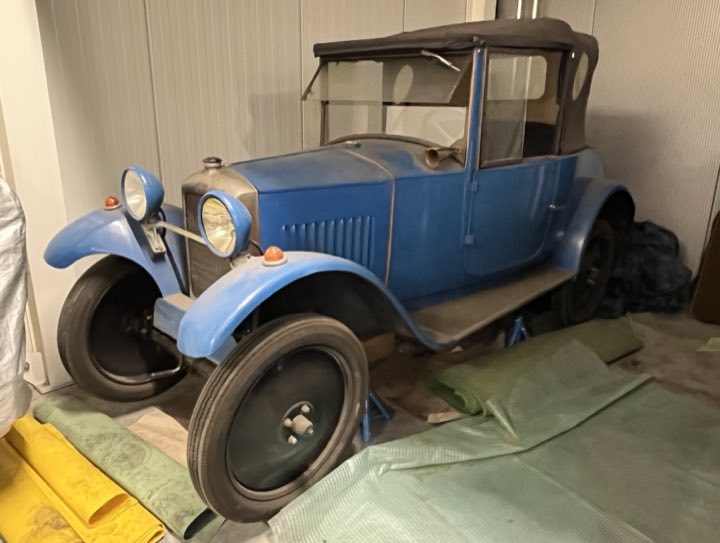
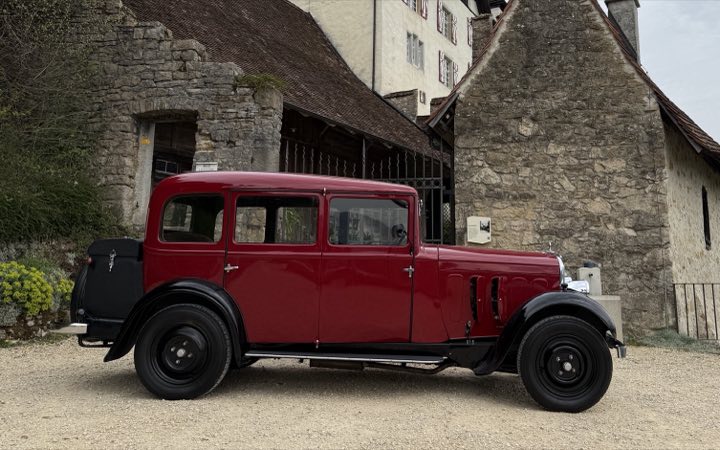
Two Peugeots from another era
The blue Peugeot 172 BC belongs to a model family also known as the Quadrilette in the early 1920s. The BC version was offered in 1924 and 1925. Its history reflects a time when a small four-cylinder engine and propeller-shaft drive could underpin a range of body styles.
The burgundy Peugeot 301 C is eight years newer. The 301 range paired a water-cooled four-cylinder engine and rear-wheel drive with independent front suspension. The photos trace two different journeys: the 172 BC still being reassembled after its full overhaul, and the 301 C returning to the road after engine work.
What did French fiscal CV mean?
Chevaux fiscaux was a tax rating, not a measure of engine output. The calculation changed over time, so modern formulas should not be applied directly to these cars.
Peugeot 172 BC
The 172 BC was rated at 4 or 5 fiscal CV, depending on version.
Peugeot 301 C
The Peugeot 301 C belongs to the 8 CV tax class. This figure is not its engine power.
Why press the clutch twice?
A non-synchromesh gearbox does not match rotational speeds by itself during a shift. Double-declutching lets the driver match the gearbox input shaft speed to the next gear. It was a useful technique for both the Peugeot 172 BC and the Peugeot 301 C, but was not essential for every gear change.
- Press the clutch pedal and shift into neutral. Release the pedal in neutral so the engine drives the gearbox input shaft.
- When shifting up, let the engine speed fall. When shifting down, raise it with a brief blip of the throttle.
- Press the clutch pedal again, select the desired gear, then release the pedal.
This is a general shifting technique, not a Peugeot factory instruction. The right engine speed depends on road speed and the gear selected.